


Crumple Zone : Crash & Smash
3.722.00 Reviews
App Specs
- Version
- 0.4
- Updated On
- License
- Free
- Downloads
- 50,000+
- Developer
- Simplyplay
- Categories
- Racing
- Platform
- Android
Screenshots
 Analysis by AppCompare
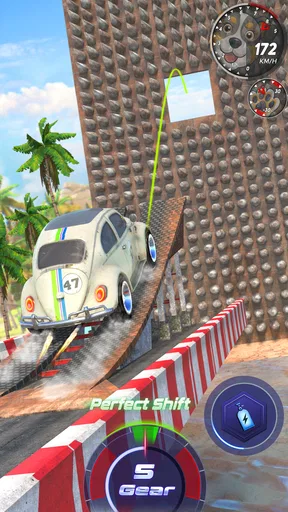
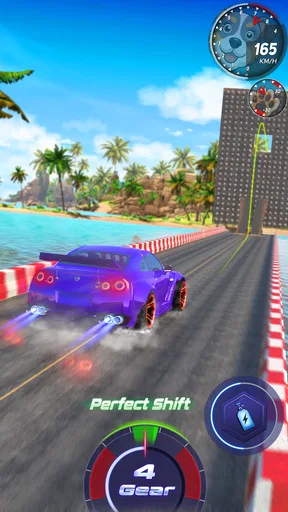
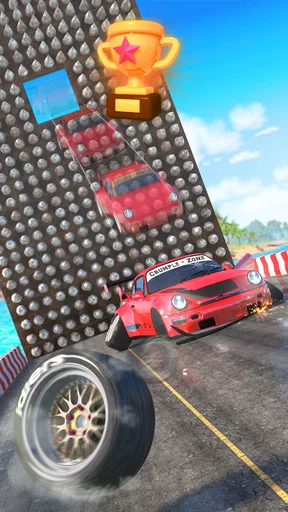
Crumple Zone: Crash & Smash is a racing game with a very focused idea: driving is less about completing a clean lap and more about deciding whether a jump is worth the landing. I found that simple premise more interesting than a conventional racing format because every launch creates a small calculation. Speed, timing, and the angle of the car matter, but so does knowing when not to push for a bigger stunt.
That focus also explains both the appeal and the limitations. This is not the kind of game I would choose when I want a broad racing career, a large vehicle collection, or a realistic driving simulator. It works better as a compact, immediate game for short sessions, especially when I want something that rewards experimentation rather than long-term planning. The game is free to download, is suitable for Everyone, and comes from Simplyplay.
What makes the driving feel different
The central challenge is not simply reaching the finish. A jump turns the car into a moving problem to solve. I have to judge the approach, commit to the launch, and then live with the result. A safe landing may be less spectacular, but it can be more useful than a reckless attempt that leaves the car badly damaged or unable to continue effectively.
That risk-and-reward structure gives the racing a physical quality. Instead of treating the track as a flat path from start to finish, I read it as a sequence of decisions. A ramp is an invitation, not an automatic command. If I arrive with poor speed or an awkward line, the best move may be to prepare for the next section rather than force a jump that looks impressive.
I also like that the concept is easy to understand without a long explanation. Someone can pick it up and immediately understand the basic objective: drive, jump, and try to control the consequences. The challenge comes from improving judgment, not from learning a complicated set of rules. That makes it approachable for casual players while still leaving room for people who enjoy repeating a section until their timing becomes consistent.
The trade-off is variety. A game built around one strong physical idea can feel fresh at first, but players who need many modes or a deep progression structure may run out of reasons to return. I would approach it as a focused arcade racer rather than a complete replacement for a larger racing game.
Where players are most likely to get stuck
The first difficulty is understanding that speed alone is not always helpful. My instinct in a racing game is usually to accelerate whenever possible, but a jump changes that logic. Too little speed can produce a short, awkward landing, while too much can make the car travel farther than expected. The useful skill is learning to separate “fast” from “well prepared.”
Worth Reading Before You Choose

Flipboard Shows What News Apps Must Do Beyond the Feed

Switching to Android Auto Means Rethinking Your Driving Routine

Google Calendar Makes a Crowded Week Easier to Manage

Ludo King Makes the Most of the Minutes Between Plans

Baby Panda World Brings Quick Play to Modern Phones, but Its Game Library Feels Busy

ESPN’s Live Game View Makes Following Close Games Easier
Another common sticking point is treating every failed jump as a control problem. Sometimes the mistake happens before the ramp. A slightly poor approach line, a late correction, or an attempt made without enough room to stabilize can determine the outcome before the car leaves the ground. Watching the entire sequence rather than only the airborne moment helps identify the real cause.
I recommend making small adjustments between attempts. Changing several things at once makes it difficult to learn. If I alter my speed, steering, and timing together, a successful landing tells me very little. A better routine is to keep the approach mostly the same and change one decision, such as beginning the correction earlier or entering the ramp from a cleaner angle.
There is also a mental trap in chasing the most dramatic result. A large jump looks like progress, but a controlled landing is often the more repeatable outcome. When I stopped judging an attempt only by its height or distance, the game became less frustrating. The goal is not to make every jump extreme; it is to make the whole run more dependable.
Setup checks before blaming the game
Because this is a mobile game, the first practical step is to confirm that the device meets the basic software requirement. Crumple Zone runs on Android versions from 7.1 onward. That makes it accessible to many older devices, but compatibility on paper does not guarantee that every phone will feel equally comfortable during play.
Before starting a serious session, I would close other demanding apps and make sure the phone is not already struggling with heat or low available storage. Those are general mobile habits, but they matter particularly in a game where a delayed response can turn a carefully timed jump into a failed one. If the game feels inconsistent, restarting the app and trying again after the device has cooled is a sensible first check.
It is also worth testing the controls in a low-pressure run. I would not begin by attempting the most difficult jump repeatedly. First, I want to know how quickly the car responds to steering and how much correction feels manageable in the air. This short calibration period can prevent me from mistaking unfamiliar controls for a technical fault.
Players should also remember that the game is free but includes optional in-app purchases ranging from $9.99 to $179.99 per item. That is important when deciding whether the game fits a family device or a personal spending limit. The age rating is Everyone, but an age-appropriate rating does not remove the need to review purchasing settings, especially if other people can access the device.
The current version is 0.4, so I would keep expectations realistic about polish and long-term refinement. A version at this stage can still feel enjoyable while having rough edges that would be less surprising in a mature racing title. If an issue appears, checking that the installed version is current and restarting the app are reasonable general steps before assuming the whole game is unusable.
Recovering a session after a bad run
When a run goes wrong, I find it more useful to reset my approach than to rush immediately into another identical attempt. A short pause helps me identify whether the failure came from entering too fast, steering too late, or trying to correct too aggressively. Even without detailed telemetry, the visible result usually gives enough information to make one controlled change.
A useful recovery workflow is to divide a difficult sequence into three moments: the approach, the launch, and the landing. During the approach, I focus on alignment and preparation. At launch, I avoid making a last-second correction unless it is clearly necessary. During the landing, I prioritize keeping the car stable over forcing a stylish recovery. This makes practice more deliberate and reduces the feeling that success depends on luck.
If the game becomes unresponsive or a session behaves strangely, I would first leave the run and reopen the app rather than repeatedly tapping controls. After that, I would test a simpler section. If ordinary driving works but one particular attempt repeatedly behaves differently, the issue may be related to the situation rather than the entire installation. If the problem affects every session, restarting the device is a sensible next step.
I would be cautious about reinstalling immediately. Reinstallation can be disruptive, and it is better used after simpler checks have failed. Before taking that step, I would make sure I understand whether any local progress could be affected. That is a general precaution, but it is especially sensible with a developing game where the exact recovery behavior may change between versions.
Another practical tip is to avoid judging performance while the phone is under unusual pressure. A device that is hot, nearly full, or busy with background activity can make any touch-based game feel less reliable. If the same jump becomes easier after a clean restart and a cooler device, the problem was probably the playing conditions rather than the racing design itself.
When the game is not the cause
Not every failed jump points to a software problem. Touch input can be affected by a damp screen, a thick or poorly fitted protector, or fingers placed differently from one attempt to the next. I would clean the display and play with a consistent grip before deciding that the controls are inaccurate.
Performance complaints can also come from the phone rather than the game. Older hardware may technically meet the minimum operating-system requirement while still delivering a less comfortable experience than a newer device. If other games or animated apps also stutter, freeze, or respond slowly, that broader pattern is a useful clue.
Network conditions are another possible distraction, although I would not assume that every interruption is caused by connectivity. If other apps are having trouble at the same time, checking the connection makes sense. If everything else works normally and only one specific in-game action feels wrong, I would return to control technique and approach timing before changing network settings.
Purchasing concerns deserve their own practical check. Since the game is free to start but offers optional items, I would review the device’s purchase protections before handing it to a child or sharing it with someone unfamiliar with the store account. The rating makes the game broadly accessible, while the purchase range means account safeguards are still worth setting up.
The same principle applies to expectations. If I install this expecting a full simulation, realistic vehicle handling, or a deep championship structure, I may interpret its focused design as a defect. The game is trying to make jumps and crashes the main event. A player wanting detailed racing strategy may be happier with a conventional circuit racer, while someone wanting quick physical challenges may find this narrower approach more satisfying.
Who should play it and who should skip it
I think it suits players who enjoy short attempts, visible consequences, and learning through repetition. It is a good fit for a quick break when I want a game that can be understood immediately but still gives me a reason to retry a difficult section. The best audience is probably comfortable with imperfect runs and willing to treat each attempt as practice rather than expecting instant mastery.
It is less suitable for anyone who dislikes trial and error. If a failed landing feels annoying rather than informative, the core loop may become tiring quickly. Players who prefer precise lap times, extensive customization, multiplayer competition, or a large selection of racing formats should look toward more established alternatives in those areas.
For an everyday scenario, I can imagine playing it while waiting for an appointment or taking a short break between tasks. I would use a few attempts to test one jump, stop after a clean improvement, and return later instead of trying to force a long session. That approach matches the game’s compact concept better than treating it like a marathon racing campaign.
The free entry point makes it easy to try without committing immediately. Still, I would not spend on optional items simply because a difficult section is frustrating. First I would make sure the problem is not poor timing or an unsuitable approach. The purchase range means I would treat spending as a deliberate choice, not as part of the basic requirement for deciding whether the driving is enjoyable.
How it compares with ordinary racing games
Compared with a traditional arcade racer, Crumple Zone places less emphasis on maintaining a clean racing line around corners and more on handling moments when the track breaks the rhythm. The important question is often not “How do I take this bend fastest?” but “What condition will my car be in after this jump?” That gives the game a more experimental feel.
Compared with a realistic driving game, it is easier to approach casually because the idea is immediately readable. I do not need to study a full vehicle model to understand why a launch failed. At the same time, players seeking authentic braking, tuning, or racing etiquette may find the focused stunt-driven structure too limited.
Compared with endless runners, the car-based format gives each attempt a stronger sense of physical cause and effect. I am not simply reacting to obstacles appearing ahead; I am shaping the way the vehicle reaches and leaves a jump. The downside is that repetition can become noticeable sooner if the available challenge does not keep changing enough for the player’s taste.
My practical comparison is simple: choose this game for concentrated jump-and-recovery decisions, choose a conventional racer for broader competition and progression, and choose a simulator for realistic vehicle behavior. None of those choices is automatically better. They serve different moods, and this one works best when I want a compact test of timing and control.
My practical verdict
After spending time with it, I see Crumple Zone as a focused racing experiment rather than an all-purpose driving game. Its strongest quality is that a jump feels meaningful. I am constantly weighing a safer landing against a more ambitious attempt, and that decision gives ordinary movement a little tension.
The game’s main friction comes from the same narrow focus. Once I understand the basic rhythm, my enjoyment depends on how much I like repeating attempts and refining small changes. The early version number also makes it sensible to allow for rough edges, while the optional purchases mean families should check spending controls before sharing access.
Simplyplay has made something easy to try and easy to explain, but not necessarily easy to master. I would recommend it to a friend who likes arcade challenges, quick sessions, and the satisfaction of turning a failed jump into a controlled landing. I would skip it in favor of a larger racing title if I wanted extensive content, realistic driving, or a long career structure.
With an average rating of 3.7 from over 700 ratings and more than 50 thousand installs, it has already attracted a modest player base without presenting itself as a massive racing platform. For me, that is the right way to frame it: a free, compact racing game built around calculated jumps, patient practice, and learning when restraint is faster than bravado.
Pros
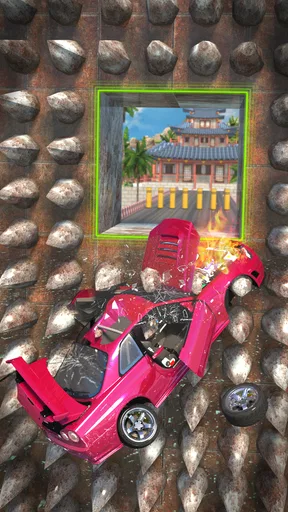
- Realistic crash physics make every collision feel satisfying.
- Simple controls let new players start smashing cars immediately.
- Short sessions work well for quick breaks or casual play.
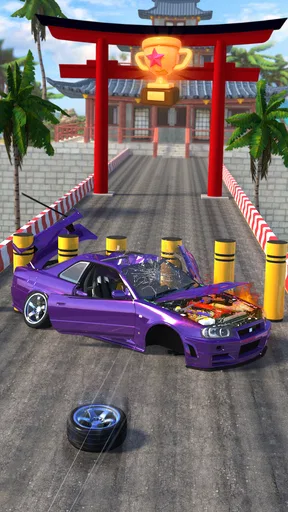
- Vehicle damage adds visual feedback and makes crashes more rewarding.
- Different environments keep the destruction from feeling repetitive.
Cons
- Gameplay can become repetitive after extended play sessions.
- Some vehicles or upgrades may require significant grinding.
- Physics occasionally produce awkward or unpredictable collisions.
- Ads may interrupt the experience
- depending on the game version.
- Performance can vary on older phones during heavy crashes.
FAQs for Crumple Zone : Crash & Smash
What is Crumple Zone: Crash & Smash?
Crumple Zone: Crash & Smash is a physics-based destruction game focused on vehicle crashes, collisions, and spectacular smash scenarios. Players can drive into objects, trigger pileups, and watch cars deform or break apart through simulated damage. The main appeal is experimentation and visual impact rather than realistic racing, making it suitable for short, casual play sessions.
How do you play Crumple Zone: Crash & Smash?
Gameplay generally revolves around controlling a vehicle, choosing a crash situation, and creating as much destruction as possible. Depending on the scenario, you may need to hit specific targets, survive a collision, or cause widespread damage. Controls are designed to be accessible, so new players can usually start experimenting quickly without learning complicated racing mechanics.
Does Crumple Zone: Crash & Smash require an internet connection?
The core crash and destruction experience is designed to be playable offline in many situations, which is convenient when you are traveling or have limited connectivity. However, some features may still require an internet connection, including advertisements, analytics, updates, cloud-related services, or optional purchases. It is best to launch the game once online before relying on it completely offline.
Is Crumple Zone: Crash & Smash free to download and play?
The game can typically be downloaded without an upfront purchase, but free access may be supported by advertising or optional in-app purchases. Depending on the version available for your Android or iOS device, you may encounter ads between attempts or offers for extra content and benefits. Review the store listing carefully, especially if children will be using the device.
Is Crumple Zone: Crash & Smash suitable for children?
Crumple Zone: Crash & Smash presents cartoon-style vehicle destruction rather than realistic violence, so its content is generally more playful than graphic. Nevertheless, parents should check the official age rating because ratings can vary by platform and region. Advertising, in-app purchases, and the excitement of repeated crashes are also worth considering before allowing younger players to use it unsupervised.


